
Signs Your Espresso Machine Is Not Being Cleaned Properly (And How It Affects Coffee Quality).
Ironically, when I ask customers how often they clean their espresso machine, the answer is almost always, “Every day.”
In reality, there is a big difference between cleaning a machine and cleaning it properly. Many operators rinse portafilters, wipe steam wands, and run water through the group heads as part of their daily routine. While these tasks are important, they do little to remove the coffee oils, fine coffee grounds, and residue that gradually build up behind the shower screen, dispersion plate, group seal, and inside the portafilter assembly.
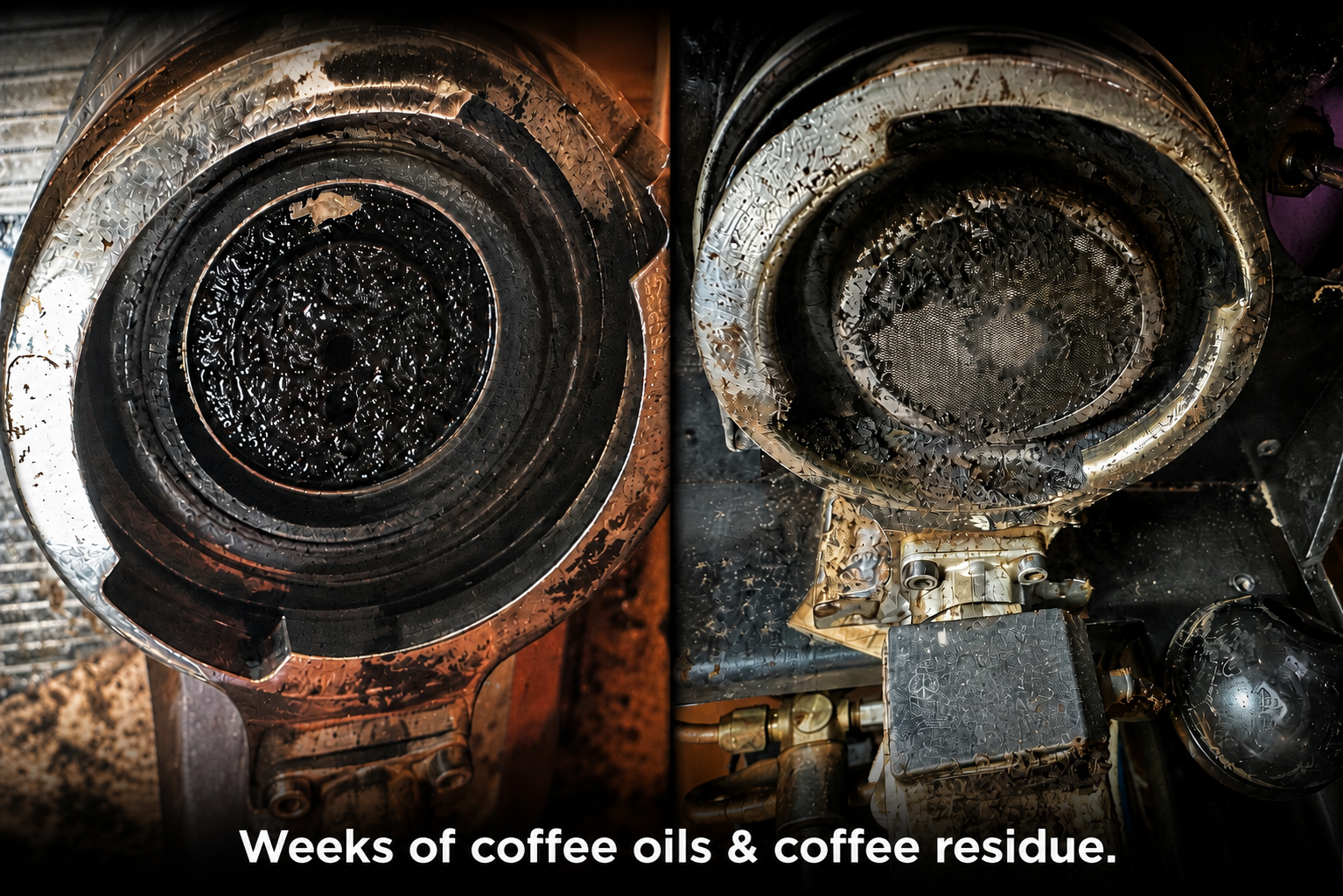
The image above are from machines whose owners genuinely believed they were cleaning them on a regular basis. Weeks of coffee oils, coffee grounds, and residue had accumulated inside the group head, restricting water flow and affecting extraction quality.
Over time, these deposits become rancid due to constant exposure to heat, affecting water flow and introducing stale, bitter flavours into every cup of coffee. In severe cases, shower screens become partially blocked, restricting water flow and causing uneven extraction. This often results in channelling, inconsistent shot times, poor crema, and disappointing espresso quality.
How a Dirty Espresso Machine Affects Coffee Quality.
Many people are surprised to learn just how much a dirty espresso machine can affect the taste of coffee. As coffee oils accumulate inside the group head, shower screen, dispersion plate, portafilter, and basket, they begin to oxidise and deteriorate.
Common symptoms include:
• Bitter espresso
• Burnt or harsh flavours
• Poor crema
• Inconsistent extraction
• Uneven shot times
• Reduced sweetness and clarity
• Channelling during extraction
Many operators gradually become accustomed to the declining taste of their coffee and do not realise how much the machine is affecting the final cup until it has been professionally cleaned and serviced.
Even the highest-quality coffee beans cannot produce excellent espresso if they are passing through contaminated brewing components.
The Importance of Backflushing Your Espresso Machine.
A machine can appear clean on the outside while hiding years of contamination internally. This is why regular backflushing with the correct cleaning products, such as Puly Caff, is so important.
Water alone cannot remove the coffee oils and residue that build up inside the group head, shower screen, and three-way solenoid valve. Using a specialist espresso machine cleaner helps break down these deposits before they begin to affect coffee quality and machine performance.
Regularly removing and cleaning shower screens and dispersion plates is also essential. This preventative maintenance helps maintain even water flow, improves extraction, produces better-tasting coffee, and reduces unnecessary wear on machine components.
Without these deeper cleaning procedures, coffee quality gradually declines, often without the operator realising that the machine itself is the cause.
Use the Correct Cleaning Brushes.
Another area that is often overlooked is the group head seal. Even when operators are carrying out regular cleaning, many are not using the correct tools to clean around the seal properly.
Coffee grounds and oils become trapped in the groove where the group seal sits. Using the correct group head cleaning brush is essential because it is designed to reach into this groove and remove residue from areas that are difficult to access.
I have seen people use toothbrushes and, while that is certainly better than doing nothing, they rarely reach deep enough into the groove to clean around the group seal properly. As a result, coffee residue continues to accumulate behind the seal, where it is often left untouched for months or even years.
The same applies to shower screens. A proper espresso machine cleaning brush will do a much better job of removing stubborn coffee deposits than improvised cleaning tools.
A few extra minutes spent cleaning with the correct tools can make a significant difference to both the taste of your coffee and the long-term reliability of your espresso machine.
Do Not Forget the Portafilters and Baskets.
Another area that is frequently overlooked is the portafilter and basket assembly. Many operators clean the outside of the portafilter and rinse the basket between uses, but rarely remove the basket itself for a thorough clean.
Over time, coffee oils, fine coffee particles, and residue build up behind the basket, around the retaining spring, inside the portafilter body, and within the spouts. These deposits eventually become rancid and can introduce stale, bitter flavours into every espresso shot.
As part of a regular cleaning routine, both the portafilter baskets and the portafilters themselves should be cleaned thoroughly using a specialist espresso machine cleaner such as Puly Caff or a similar product designed to remove coffee oils and residue.
Soaking these components periodically helps dissolve stubborn deposits that cannot be removed through rinsing alone. It is important to always follow the manufacturer’s instructions regarding concentration, soaking times, and rinsing procedures.
When inspecting machines during service visits, it is common to find heavily contaminated baskets and portafilters on machines that operators believe are being cleaned daily. This highlights the importance of periodically dismantling these components and cleaning them properly rather than relying solely on rinsing between uses.
A Complete Espresso Machine Cleaning Routine.
A proper espresso machine cleaning routine should include:
• Daily backflushing using the correct espresso machine cleaning products.
• Regular removal and cleaning of shower screens.
• Cleaning behind and around group head seals using the correct cleaning brushes.
• Cleaning steam wands after every use.
• Removing and cleaning dispersion plates.
• Removing and cleaning portafilter baskets and portafilters using a specialist cleaner such as Puly Caff.
• Cleaning beneath the basket, around the retaining spring, and inside the portafilter spouts.
• Thoroughly rinsing all components before reassembly.
• Following the cleaning product manufacturer’s instructions at all times.
Taking a little extra time to clean these often-overlooked components can dramatically improve coffee quality, extend the lifespan of machine parts, and help prevent expensive repairs.
Need Help With Your Espresso Machine?
If you are experiencing any of the issues shown in these photographs, Steam & Grind can help.
We specialise in espresso machine servicing, preventative maintenance, fault finding, repairs, and deep cleaning for commercial and domestic espresso machines. A professionally maintained machine not only produces better coffee but is also more reliable, more efficient, and less likely to suffer costly breakdowns.
If your espresso has started to taste bitter, burnt, harsh, or lacks the sweetness and clarity you would normally expect, the problem may not be your coffee beans or grinder settings. It could simply be that your machine needs a thorough clean and service.
If you are unsure whether your espresso machine is being cleaned properly, or if your coffee quality has started to decline, Steam & Grind can help. We can assess your cleaning procedures, inspect the condition of your machine, and recommend the most effective maintenance programme to keep your equipment producing excellent coffee day after day.
Remember, great coffee starts with a clean machine. Even the best coffee beans and grinder setup cannot compensate for coffee oils, residue, and contamination that have been allowed to build up inside an espresso machine.



Please email me or text me images of the fault/s including your equipment's make and model number.
Legal info
Steam & Grind Cardiff
Commercial Espresso Machine Repair & Servicing Across South Wales & The South West
Commercial espresso machine repair, coffee grinder servicing, preventative maintenance, machine installations, mobile coffee setup installations, and PSSR 2000 boiler inspections.
Areas Covered: Cardiff, Bridgend, Swansea, Newport, Barry, Penarth, Caerphilly, Pontypridd, Llantrisant, Merthyr Tydfil, Neath, Port Talbot, Llanelli, Carmarthen, Brecon, Abergavenny, Monmouth, Chepstow, Bristol and Bath.
We regularly travel up to 1.5 hours from our Cardiff base. If your location is not listed, please contact us to discuss your requirements.
